
Managing Transitions
The Big ReStack of Festivals
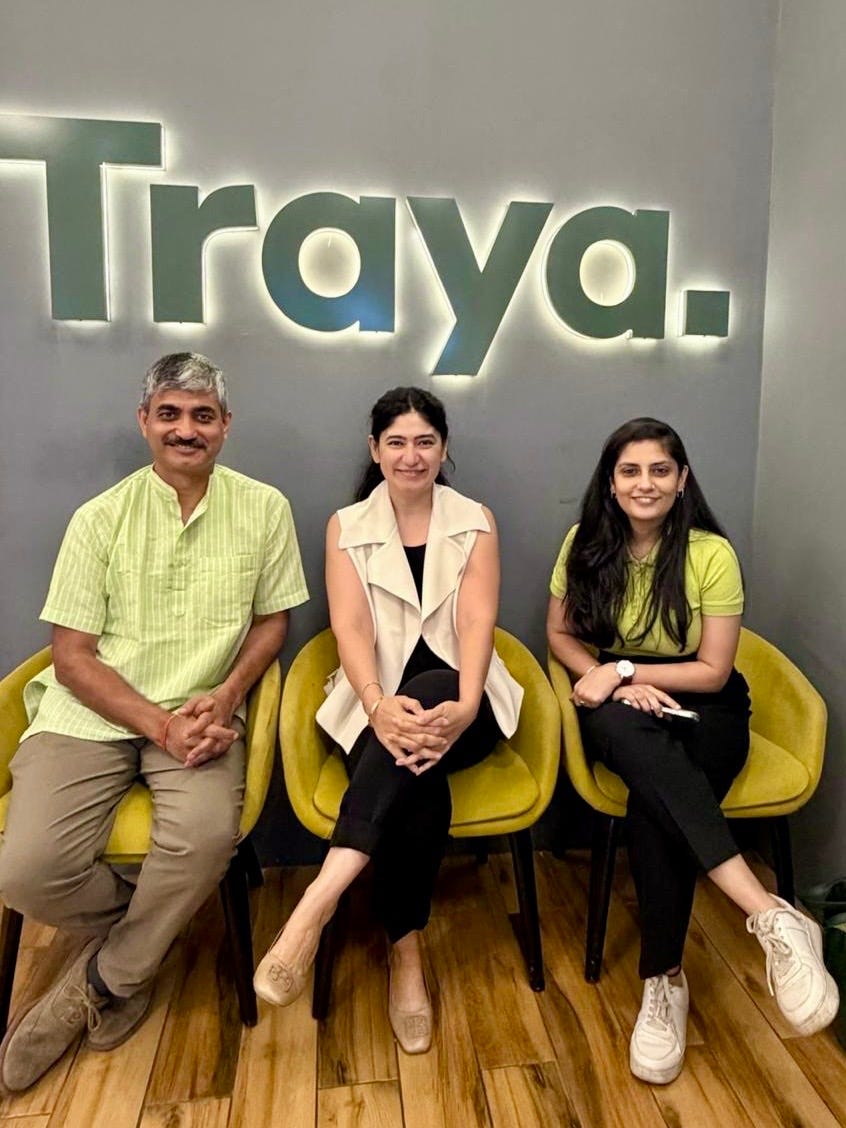
This week felt like a series of circles quietly closing—and new ones opening. Visiting Traya’s Mumbai office felt like one such moment. Seeing Saloni Anand in her element—as a founder building a purpose-led healthcare company with clarity and discipline—was affirming. The scale has grown, the organisation has matured, but the values remain intact. Campus-to-company journeys like these are reminders that meaningful relationships compound over time, resurfacing with new depth and relevance.
Running through the week—quite literally—were familiar faces, long associations, festivals in different forms, and conversations that picked up without effort. Across founders, runners, educators, and builders, a common thread stood out: growth that endures is rarely flashy. It is patient, values-led, and willing to evolve without losing its core.
Whether in a startup office, a product launch at the intersection of AI and faith, or a community that has grown together over years, the work that lasts seems to share the same qualities—clarity of intent, respect for tradition, and the confidence to adapt. That, more than outcomes or milestones, felt like the real story of the week.
DTW
During the Week, as Makar Sankranti arrived, my phone filled with greetings from different parts of the country—each carrying a slightly different flavour of the same festival. But one phone was special!
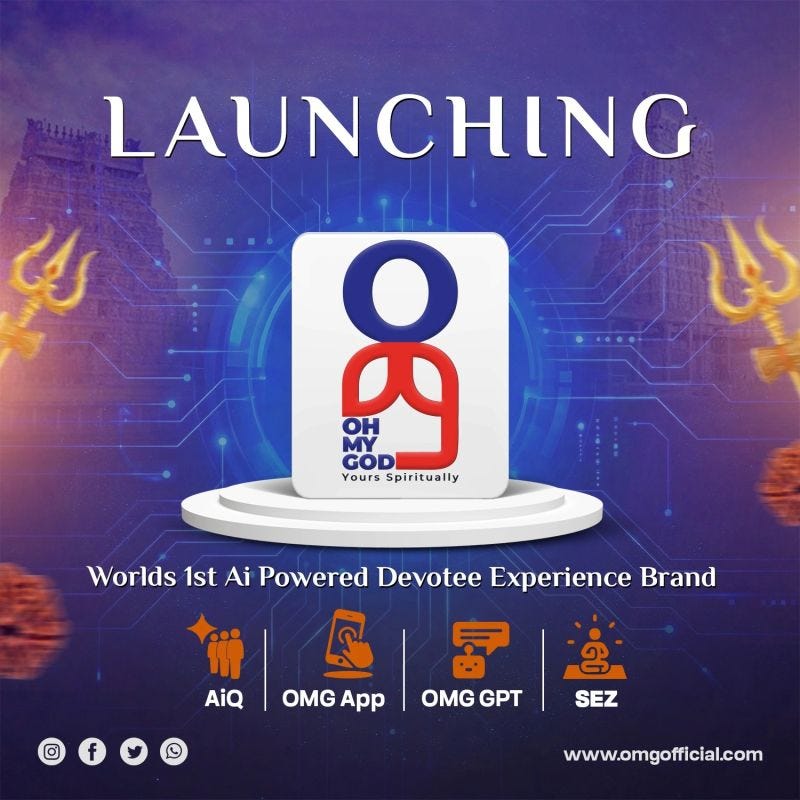
On Makar Sankranti, I was invited by friends at GWCdata.ai to share pre-launch preview of Oh My God (OMG)—the world’s first AI-powered devotee experience brand. It has been a year in the making, and seeing the product finally take shape was deeply satisfying. Here, technology doesn’t replace tradition; it supports it. Innovation doesn’t distract from faith; it quietly aids the spiritual journey. OMG positions itself as a one-stop spiritual ecosystem—where modern tools meet temple rhythms, and where devotion is enhanced, not disrupted.
Congratulations and Best Wishes to the team headed by Naveen Kumar and Mamtha Shanmugam (IBS Hyderabad MBA2020 )
Receiving these greetings was a gentle reminder that festivals in India have never been uniform. They have always adapted to context while holding on to meaning. And perhaps that is the best way to begin thinking about how festivals are being restacked today. Like temple visits and other spiritual experiences, even festivals are being restacked—not because people celebrate less, but because what festivals do in our lives has quietly changed. On the surface, much looks familiar: dates on the calendar, rituals repeated, food prepared, homes decorated, journeys undertaken. Yet beneath this continuity, the function of festivals has shifted. They are no longer just cultural or religious markers. They have become systems that organise time, attention, identity, and belonging in a world that rarely pauses on its own. Seen this way, festivals are not disappearing. They are being structurally reconfigured.
Spot the Complement Shift — From Ritual to Experience
Traditionally, festivals were complemented by ritual. Meaning came from repetition: doing the same things, in the same sequence, year after year. Participation mattered more than novelty. You didn’t need to explain a festival; you absorbed it by being present.
That complement has shifted.
Today, festivals are increasingly complemented by experience. Not in a superficial sense alone, but in how they are framed and remembered. Travel, aesthetics, food, gifting, and documentation now sit alongside ritual. Platforms amplify this shift. What was once private becomes shareable. What was once local travels across geographies.
This shift is neither entirely good nor bad. It has allowed younger generations to reinterpret traditions, migrants to carry festivals across borders, and communities to widen participation. At the same time, it introduces pressure—on how a festival should look, feel, and be seen. Presence risks being replaced by performance. Ritual risks becoming content.
The restack here is subtle. Festivals still exist, but their meaning increasingly depends on how consciously we choose to experience them rather than simply inherit them.
Map the Architecture — From Community-Owned to Platform-Mediated
The architecture of festivals has changed as well. Earlier, festivals were community-owned. Families, neighbourhoods, temples, mosques, churches, gurudwaras, village councils, and local associations held control. Authority was decentralised but deeply embedded. No single actor needed to optimise the experience.
Today’s architecture is layered. Communities still anchor meaning, but markets shape scale. Platforms shape timing, narrative, and reach. Institutions intervene for safety, regulation, sponsorship, and branding. What was once informal is now coordinated, sometimes curated.
Power shifts quietly in this architecture. When platforms mediate festivals, attention becomes the scarce resource. What is visible grows. What remains understated risks being sidelined. This does not automatically hollow out festivals, but it changes where influence sits.
The challenge is architectural balance. Festivals that become too centralised lose intimacy. Those that resist all change risk fading. The most resilient festivals are those that allow multiple layers to coexist—ritual alongside reinvention, silence alongside spectacle, local meaning alongside wider participation.
Read the Tempos — Cycles in a Real-Time World
Festivals were designed for a slower world. They marked seasons, harvests, lunar cycles, and historical events. Anticipation built over weeks. Memory lingered for months.
Today, we live at real-time speed. Notifications, comparisons, and content flows don’t pause for festivals. This creates a tempo mismatch. Festivals that are meant to slow us down are often experienced under acceleration.
This mismatch shows up in subtle ways: rushed travel, overpacked schedules, shortened attention spans, and a sense that celebrations end before they settle. The calendar says pause, but the mind keeps racing.
The restack here is about intentional pacing. Many people now consciously carve out slowness within festivals—long meals, unstructured time, walks, shared silence, delayed departures. These choices are not accidental. They are acts of resistance against a world that no longer creates pauses for us.
Festivals that survive meaningfully will be those that protect their tempo—not by rejecting modern life, but by offering a different rhythm within it.
Target the Constraint — Attention, Not Authenticity
The most common anxiety around festivals today is authenticity. Are festivals becoming too commercial? Too performative? Too diluted?
But authenticity is rarely the binding constraint. Attention is. When attention fragments, rituals thin out. When festivals compete with constant stimulation, depth suffers. The problem is not that people care less, but that care is stretched across too many channels.
Restacking festivals requires deliberate choices: what to foreground, what to simplify, and what to let go. It requires saying no—to excess planning, excessive documentation, excessive comparison. This is harder than it sounds, because platforms reward amplification, not restraint.
The deepest festivals today are often the quietest—not because they reject modernity, but because they protect focus. They create spaces where people can be fully present, even briefly.
Festivals as Skill-Builders
There is another, less discussed aspect of festivals in their restacked form: they quietly build skills. Festivals teach coordination, patience, generosity, negotiation, and care. They require planning without over-optimisation, leadership without hierarchy, and participation without performance metrics. Children learn social rhythms. Adults practise letting go of control. Elders transmit memory without formal instruction.
In this sense, festivals are informal institutions for social learning. As formal systems struggle to teach empathy, belonging, and continuity, festivals continue to do so—quietly, imperfectly, and effectively.
The restack of festivals is particularly visible among younger generations and migrant communities. Festivals are often the first cultural practices to be adapted, shortened, relocated, or reinterpreted.
What looks like dilution from one angle often looks like survival from another. A festival celebrated in a hostel, apartment complex, or workplace is not a lesser version—it is a negotiated one. Meaning shifts, but continuity remains.
This flexibility is not weakness. It is why festivals endure. At their best, festivals teach looseness. They remind us that not everything needs optimisation. That repetition has value. That joy does not need justification. That time can be marked without being measured. In a world obsessed with outcomes, festivals legitimise being present without producing anything tangible. They allow people to gather without agendas, to repeat without boredom, to remember without documentation. Holding festivals loosely—not rigidly, not carelessly—allows them to remain alive. Tight control turns them brittle. Complete neglect lets them fade.
The Big Restack of Festivals is ultimately a restack of intention. Festivals endure not because they resist change, but because they adapt while protecting their core purpose. They remind us that life is not meant to be one continuous sprint.
OTW
Over the Weekend, I finished the Tata Mumbai Marathon 2026. Not to a planned time, not with perfect execution—but finished with “enough in tank”. After eight years of lining up for this race, I’ve learned that some editions demand humility more than precision.
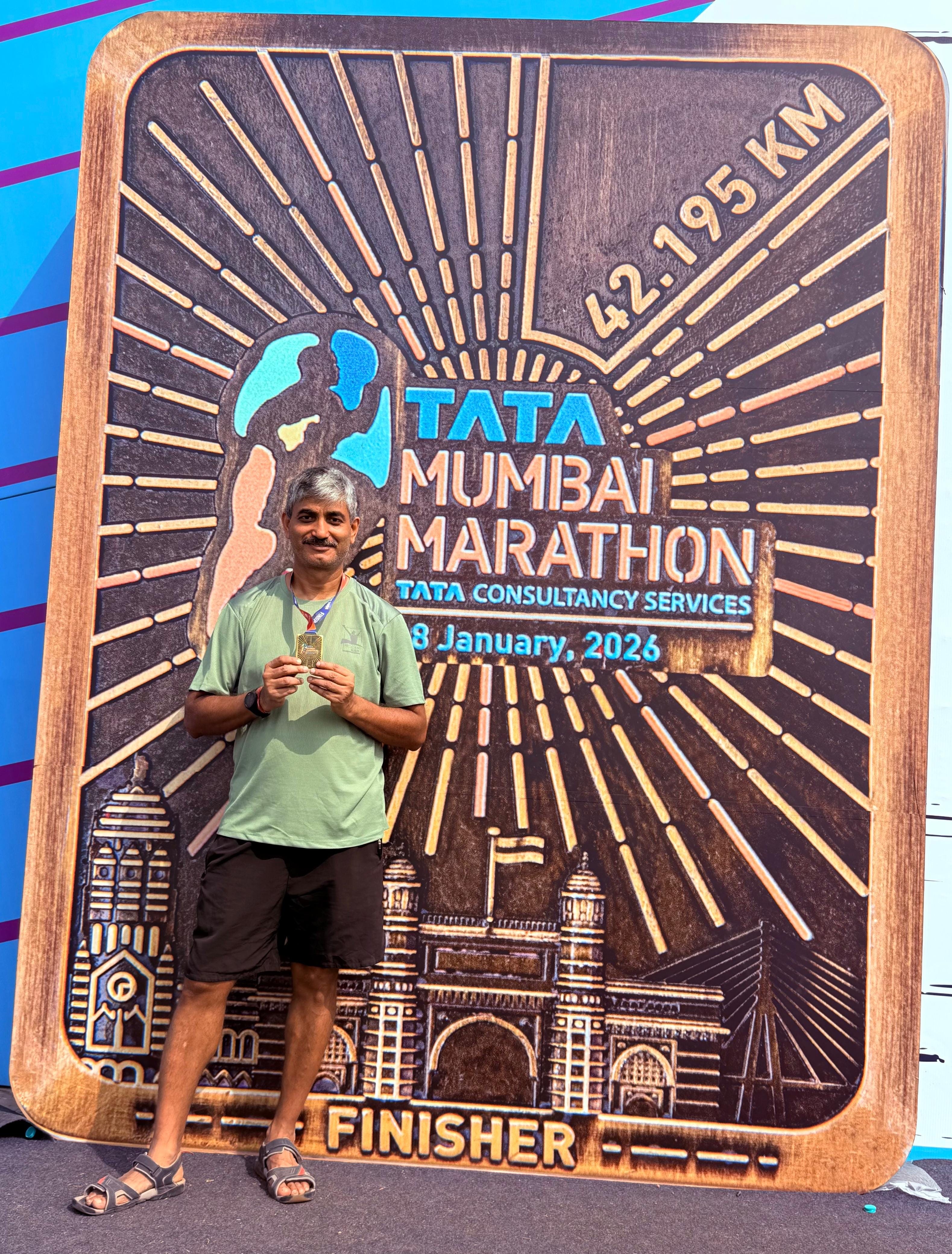
The weekend carried a familiar festival energy. Just as Makar Sankranti shows up differently across regions, TMM shows up differently each year. The expo felt reassuring—old friends from the running community, brief catch-ups, shared laughter about routes, weather, and ageing legs. There’s comfort in knowing that while goals change, the community remains.
Race morning had its usual magic. Mumbai wakes early for this race, and it shows. Volunteers steady and smiling, runners quietly nervous, strangers wishing each other luck without irony. On the course, familiar faces appeared at unexpected moments. Some were struggling, some cruising, some just smiling through discomfort. We acknowledged each other the way long-distance runners do—without explanation, without judgement.
Somewhere along the way, the plan loosened. The potholes finally caught up and I got my ankle twisted in one of them right at the Peddar Road climb at the 10 km mark. The mind played games but the training caught up and I sailed through the next 20 km as well. But eventually it caught up again and what followed was not stubbornness, but adjustment. Slowing down. Listening. Letting go of expectations while holding on to movement. The festival spirit of the city carried me—cheers, claps, and encouragement that felt collective rather than personal. The highlight was a fellow runner catching up and talking about Khardung La Challenge. It took me couple of minutes to realise that he had watched the Runner’s High Episode on my running journey.
Finishing without theatrics reminded me why I keep returning. This race, like festivals, teaches acceptance as much as ambition. You prepare, you show up, and then you adapt. Nine years in, TMM continues to be less about proving something and more about participating in something larger—where just finishing is sometimes the most honest outcome.


Done is better than perfect—not because quality doesn’t matter, but because movement does. Progress needs momentum, learning needs exposure, and clarity often arrives only after action. Perfection waits for certainty; done creates it.
So, Just Do It.
I Love You
Shailendra
As a typical Mumbaikar, this really hit home. Indeed the Tata Mumbai Marathon has a way of feeling less like a race and more like a city-wide emotion where effort matters more than outcome, and showing up itself feels like a win. I’ve been part of this event earlier, and reading this while missing it this year because of my MBA and somehow it made the feeling stronger. The way you’ve written about acceptance, adjustment, and momentum over perfection is deeply human and very Mumbai in spirit. It doesn’t just talk about running it talks about life, movement, and continuing despite discomfort. Beautifully articulated and incredibly relatable. Respect for finishing, adapting, and still loving the process. And Congratulations for completion.👏