
Paying for Attention
The Big Restack of Entertainment

Some weeks bring together intensity and restraint in equal measure. As the fasting period began, it introduced a quiet discipline into the rhythm of everyday life — a deliberate slowing down, a heightened awareness of routine, and a reminder that not all forms of progress are visible or immediate. Fasting, in many ways, is less about abstinence and more about attention — to what we consume, what we prioritise, and how we respond.
Against this backdrop, the world continues to accelerate. Systems compete for attention, expertise is simulated and scaled, and structures of power are being quietly rearranged. At the same time, more grounded forms of engagement persist — conversations that do not follow an agenda, communities that come together in support of individual journeys, and moments of celebration that reconnect us with people who matter.
What becomes evident is the contrast between speed and stillness. While external systems push towards constant activity and optimisation, there is equal value in pausing, reflecting and participating more consciously. Endurance, whether intellectual, physical or personal, is shaped as much by restraint as by effort.
Perhaps that is the underlying thread. In a world being continuously restacked, the ability to slow down, observe and remain connected — to people, to purpose, to process — becomes its own form of strength.
DTW
During the Week, a relatively routine announcement from Meta signalled something deeper about how entertainment is being reorganised. The company began offering financial incentives to creators active on platforms like TikTok, YouTube and Instagram to post content on Facebook. At one level, this looks like yet another competitive move in the platform wars. At another, it reflects a more fundamental shift. Entertainment is no longer just about producing content. It is about attracting creators, directing attention, and shaping the flows through which audiences engage.
The first restack is visible in what complements entertainment itself. For decades, content was the central asset. Studios produced films, labels produced music, and broadcasters ensured distribution. Scarcity lay in access to production and distribution infrastructure. Today, content is abundant. What has become scarce is attention, and more specifically, the ability of creators to consistently attract and retain it. Platforms are no longer competing primarily on content libraries; they are competing for creators who bring their own audiences. The complement has shifted from content and distribution to creators and algorithmic amplification. In this configuration, a creator is not merely a producer but also a distribution node, and attention becomes the true currency.
The second restack lies in architecture. Traditional entertainment followed a relatively linear structure, with studios and networks controlling financing, production and distribution. Entry barriers were high, and gatekeeping was centralised. In contrast, the current architecture is platformised and distributed. Creators produce independently, platforms distribute through algorithms, and audiences discover content through feeds rather than schedules. What is particularly striking now is the portability of creators across platforms. A creator can maintain a presence on multiple platforms simultaneously, adjusting formats and strategies to suit each ecosystem. Platforms, in turn, compete to attract and retain these creators through incentives and visibility. The architecture has shifted from vertically integrated studios to a dynamic network where creators, platforms and audiences are continuously renegotiating their relationships.
This same architectural fluidity is now visible even within traditional entertainment ecosystems. Talent is no longer bound to a single studio or agency in the way it once was. The recent churn among talent agencies in India, including the exit of Janhvi Kapoor from Karan Johar’s talent management arm and similar shifts involving actors like Ranveer Singh and Parineeti Chopra, reflects what Johar himself described as a kind of “passing the parcel” across agencies. Talent moves, renegotiates representation, and optimises for opportunity across networks. What platforms are doing digitally, agencies are experiencing structurally. The control over talent is no longer fixed; it is continuously contested. This reinforces the idea that the architecture of entertainment is becoming more networked, fluid and transactional.
The third restack is in tempo. Entertainment once operated on predictable cycles. Films released on fixed dates, television followed weekly programming, and music launches were carefully orchestrated events. Today, those rhythms have been replaced by continuous, real-time cycles driven by algorithms. Content can go viral within hours and disappear just as quickly. Creators are expected to produce consistently to remain visible, and platforms reward frequency and engagement. The result is an always-on system where entertainment is not consumed in scheduled intervals but experienced as an ongoing stream. This acceleration creates both opportunity and pressure. It enables rapid reach and visibility, but it also risks fatigue, both for creators and audiences.
I experienced this shift in tempo quite personally. Aru had already binged the first part of Dhurandhar the previous day to catch up, and we found ourselves at an 8 AM show on Friday morning to watch the next instalment together. What struck me was not just the story, but the way it was being consumed. The narrative seemed designed for episodic engagement, yet presented as a film. The viewing behaviour, however, was unmistakably that of a series — catch up, continue, stay immersed. It reinforced a growing pattern: audiences are no longer adapting to formats; formats are struggling to keep up with audience habits.
Dhurandhar, in that sense, feels less like a conventional film and more like a binge-worthy series compressed into cinematic form. The pacing, character arcs and unfolding layers seem to demand episodic breathing space. This is not accidental. It reflects how deeply streaming platforms have influenced audience expectations. The distinction between cinema and long-form digital storytelling is becoming increasingly porous, driven by how audiences prefer to engage with stories over time.
The fourth restack reveals its constraint in the form of platform dependency. While creators appear more empowered than ever, their visibility and monetisation remain deeply tied to platform rules. Algorithm changes can alter reach overnight, incentive structures can be introduced and withdrawn, and content guidelines can shape what is produced. The move by Meta to pay creators highlights this dependency. Incentives are used to attract creators, but long-term sustainability remains uncertain. Creators, in many ways, are independent in production but dependent in distribution. The constraint is not creativity but control over access to audiences and revenue streams. Platforms, meanwhile, face their own constraint in retaining both creators and audiences in an increasingly competitive environment.
At the centre of all this remains the human layer. Despite technological shifts, entertainment continues to be driven by human connection. Audiences respond to authenticity, relatability and narrative. Even as AI tools begin to assist in content creation, the emotional resonance of a creator’s voice, perspective and lived experience remains difficult to replicate meaningfully. The rise of creators reflects a shift from content consumption to relationship-building. Audiences do not just watch; they follow, engage and identify. This introduces new complexities. As AI-generated content becomes more sophisticated, the distinction between authentic and synthetic creators may blur. At the same time, creators themselves may increasingly rely on data and algorithmic signals to shape their output, raising questions about the balance between creativity and optimisation.
Taken together, the restack of entertainment reveals a system in flux. The complement has moved from content to attention, the architecture from studios to platforms to creators, the tempo from scheduled releases to continuous streams, and the constraint from production capability to platform control. Yet, the most important layer remains human. The ability to connect, to tell stories and to engage meaningfully with audiences continues to define success.
Meta’s decision to pay creators is therefore not just a tactical move; it is a recognition of where power is shifting. The centre of gravity in entertainment is no longer fixed. It moves between creators, platforms and algorithms, constantly renegotiated through incentives, visibility and trust. In this evolving system, entertainment is less about what is produced and more about how attention is orchestrated
OTW
Over the Weekend, endurance took on multiple meanings — not just in terms of physical effort, but through conversations, community and quiet togetherness.
Saturday began with a Baithak organised by BuckSpeak that stayed true to its spirit — unstructured, agenda-less, and deeply reflective. We had the privilege of hosting Naveen Chand Vemuganti, whose journey through the corridors of power contrasted with the simplicity of his presence. There was no attempt to impress, only to share. Stories flowed into reflections, and reflections into questions. A few of my interns also joined in, and it was interesting to watch them absorb the conversation — seeing learning unfold not through slides or frameworks, but through lived experience and honest dialogue
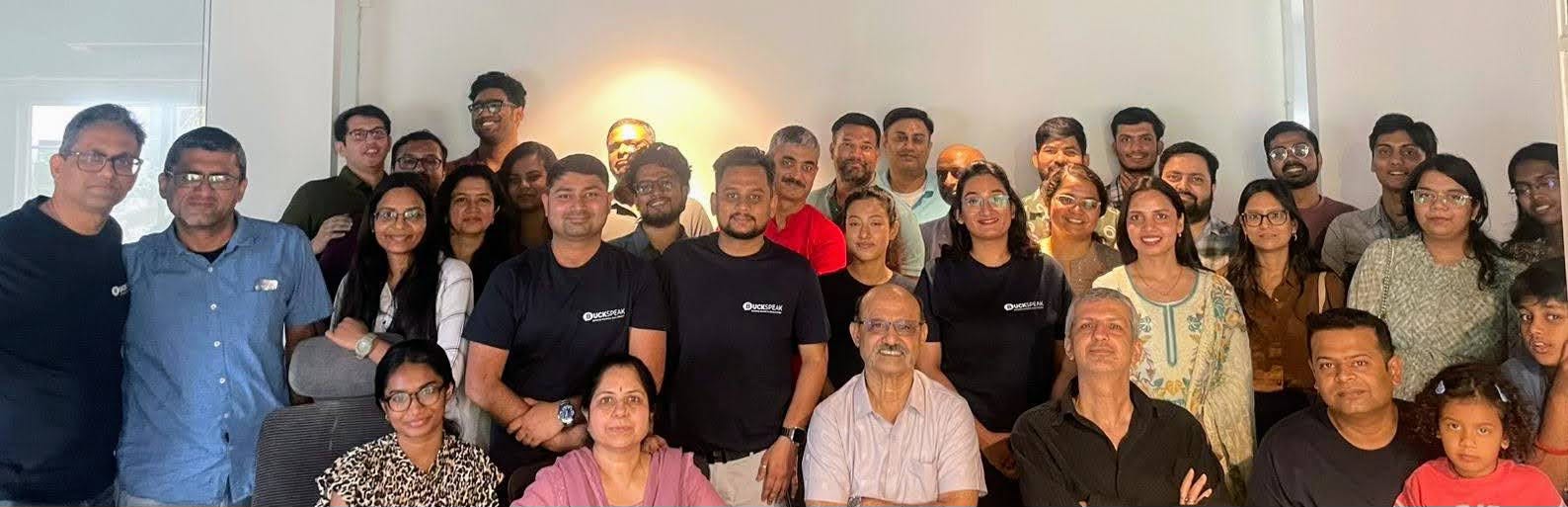
.The evening shifted gears into celebration as we joined Eid festivities hosted by Mahera and Asif at their home in PBEL City. The warmth of the gathering, the conversations over food, and the ease of being together offered a different kind of nourishment. It was also the day of exchanging Eid greetings with the loved ones across the world.


Running alongside these conversations was another kind of narrative — one of endurance at scale. The Peerancheruvu Runners community was virtually supporting Santosh Sharma as he took on the 135-mile White Sands Ultra. By Sunday morning, that support had translated into action, with members of PCR collectively running a cumulative 135 miles in solidarity. It was symbolic, yet deeply meaningful.


You may not be on the same terrain, but you share the distance. It is a reminder that endurance is rarely solitary; it is sustained by visible effort and invisible encouragement.
Wishing Health, Wealth and Happiness for You and Your Loved Ones.
I Love You
Shailendra